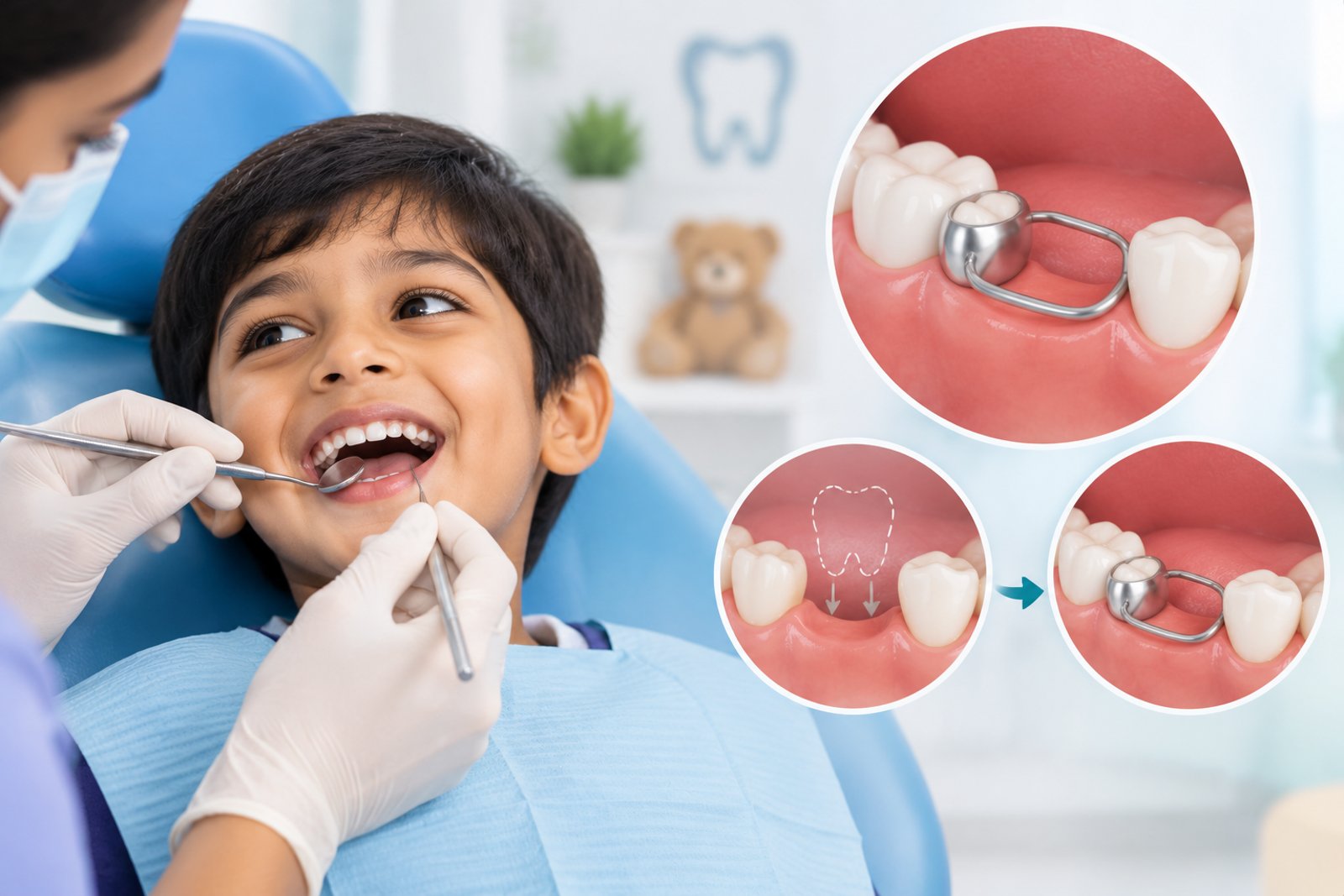
Space maintainers in pediatric dentistry are small dental appliances that help keep the right amount of space in a child’s mouth after a baby tooth is lost early. Because children’s teeth guide the growth of adult teeth, these devices are important for healthy smiles. In many cases, using space maintainers can prevent future dental problems and help with proper pediatric dental care.
What Are Space Maintainers?
Space maintainers are special devices used in children’s dental care. When a child loses a baby tooth too soon, the nearby teeth may move into the empty space. As a result, there may not be enough room for the adult tooth to come in. Space maintainers help keep this space open until the adult tooth is ready to grow. For example, dentists often use these appliances to avoid crowding or crooked teeth later.
Why Are Space Maintainers Important for Children?
Because baby teeth act as guides for adult teeth, losing them early can cause problems. However, with space maintainers, dentists can prevent these issues. Here’s why they matter:
According to the American Academy of Pediatric Dentistry, early loss of baby teeth can affect a child’s bite and jaw growth. Therefore, using space maintainers can help protect your child’s dental health.
Types of Space Maintainers
There are different types of space maintainers in pediatric dentistry. Dentists choose the best type based on your child’s needs. For instance, some are fixed, while others are removable. Here are the main types:
Because every child’s mouth is different, your dentist will explain which option works best.
How Dentists Place Space Maintainers
First, the dentist checks your child’s mouth and takes X-rays if needed. Next, they choose the right space maintainer. In many cases, the dentist will make a mold of your child’s teeth. Then, the device is custom-made to fit your child. For fixed types, the dentist attaches the appliance to the teeth with dental cement. Removable types fit like a retainer and can be taken out for cleaning. Most children feel comfortable with space maintainers after a short time.
Caring for Space Maintainers at Home
Proper care is important for kids’ tooth space maintainers. With good habits, your child’s dental appliance will last longer. Here are some tips:
Because children may forget, remind them to keep their space maintainer clean and safe.
Common Issues and When to See a Dentist
Sometimes, problems can happen with children’s dental appliances. For example, the space maintainer may feel loose or break. If your child feels pain, swelling, or notices bleeding around the device, call your dentist right away. Other signs to watch for include:
Because regular dental visits help catch problems early, always let your dentist know about any changes.