
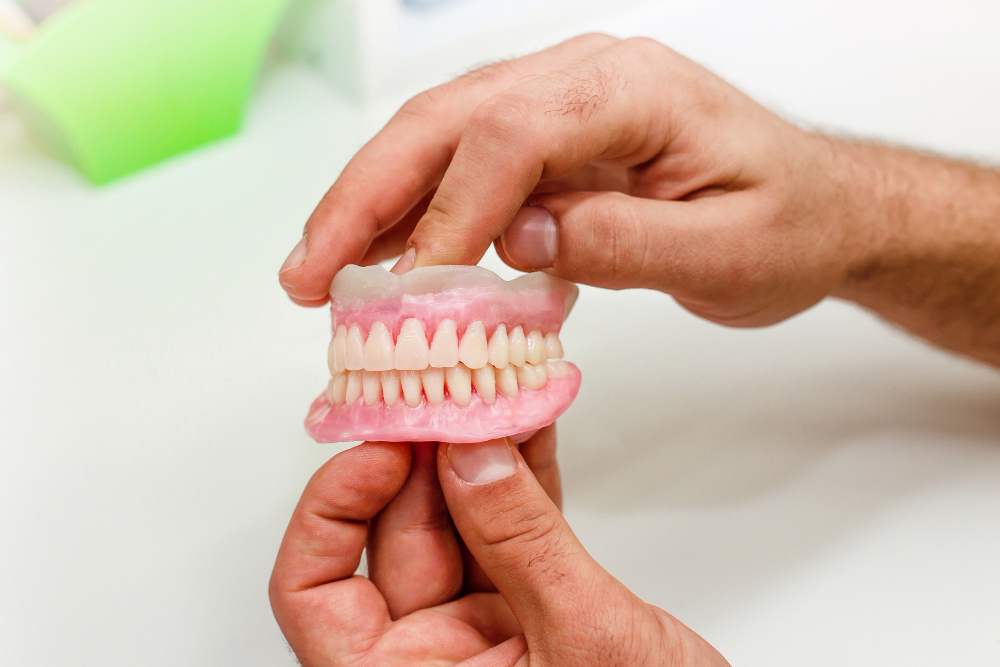
What is a Complete Denture?
A complete denture is a removable set of artificial teeth. It replaces all the teeth in your upper or lower jaw. Many people call them full dentures. Dentists use them when you have lost all your natural teeth in one or both jaws. Because they look and work like real teeth, complete dentures help you eat, speak, and smile with confidence.
Who Needs a Complete Denture?
Not everyone needs a complete denture. However, you may need one if you have lost all your teeth in your upper or lower jaw. Often, older adults need full dentures. Sometimes, younger people need them too, especially after accidents or severe dental problems. If you cannot chew food or speak clearly because of missing teeth, a complete denture may help.
Symptoms and Signs Indicating the Need for a Complete Denture
Sometimes, it is hard to know when you need a complete denture. But certain signs can help you decide. For example, you may notice:
If you have these symptoms, it is wise to visit a dentist. Early advice can make the process smoother.
Causes of Tooth Loss Leading to Complete Dentures
Many reasons can lead to tooth loss. Most often, gum disease is the main cause. However, other factors also play a role. These include:
Because tooth loss can affect your health, it is important to address these causes early.
Diagnosis and Assessment for Complete Denture
First, your dentist will check your mouth and gums. They may take X-rays to see the bone structure. Next, the dentist will ask about your health and dental history. After that, they will decide if a complete denture is right for you. Sometimes, other treatments may be needed before you get dentures. For example, you may need to treat gum disease or remove damaged teeth.
Treatment Process: Getting a Complete Denture
Getting a complete denture involves several steps. Usually, the process includes:
Because your mouth changes over time, your dentist may adjust the denture for comfort and fit. Regular check-ups help keep your dentures working well.
Care and Maintenance of Complete Dentures
Proper denture care is important for your health. With good habits, your dentures can last longer. Here are some denture care tips:
Because dentures can break, handle them with care. Never use hot water, as it can warp the denture.
Benefits and Possible Challenges
Complete dentures offer many benefits. For example, they restore your smile and help you eat better. They also support your facial muscles and improve speech. However, some people face challenges. At first, dentures may feel strange or loose. You may need time to get used to them. Sometimes, sore spots or mouth irritation can occur. But with regular adjustments, most problems can be fixed.
Prevention and Oral Health Tips
Even if you have dentures, good oral health is important. Here are some tips to keep your mouth healthy:
Because prevention is better than cure, take care of your mouth and dentures every day. For more information or personalized advice on complete dentures, consult a dental specialist at Smile Life Multispeciality Dental.